If you run a coaching or consulting business, you've probably had months that felt unpredictable in a way you couldn't fully explain. You're doing the work, showing up, delivering results for your clients, and still not sure where the next client is coming from.
After talking with coaches and consultants across different niches, the pattern was almost always the same. Strong expertise, good results for existing clients, and still no reliable way to bring in the next one more predictably.
That's the problem the Sales OS is built to solve.
Why referrals, outreach and content have limits
Most coaches and consultants rely on one of three things to get clients: referrals, content, or outreach.
Referrals arrive on someone else's timeline. You can't dial them up when things slow down, and you can't predict when the next one is coming. Content works, but it works slowly and unpredictably. You can't decide you need three new clients this month and post your way there. Manual outreach in DMs takes significant time and energy, it often feels transactional to the person receiving it, and it requires you to be actively working it every single day to keep the pipeline moving.
None of these give you a consistent, controllable way to reach the right people on your schedule. And that becomes more of a problem the higher your price point.
"Strong expertise, a niche with demand, and an offer that had been out there for months without gaining traction: 10 website visits total. No email list. No follow-up in place. No sales."
The expertise and the offer were solid. What was missing was the infrastructure around them. Without a system connecting attention to purchase, even a strong offer stays invisible.
What a sales system actually does
A sales system is a set of connected processes that take someone from not knowing you exist to becoming a paying client, without requiring you to be manually involved in every step. When it works well, it does a few things at once:
- Reaches the right people consistently, not just when the algorithm cooperates
- Captures their interest before it fades, so you own that audience
- Follows up automatically so no one slips through the cracks
- Moves people toward a conversation or a purchase at the right moment
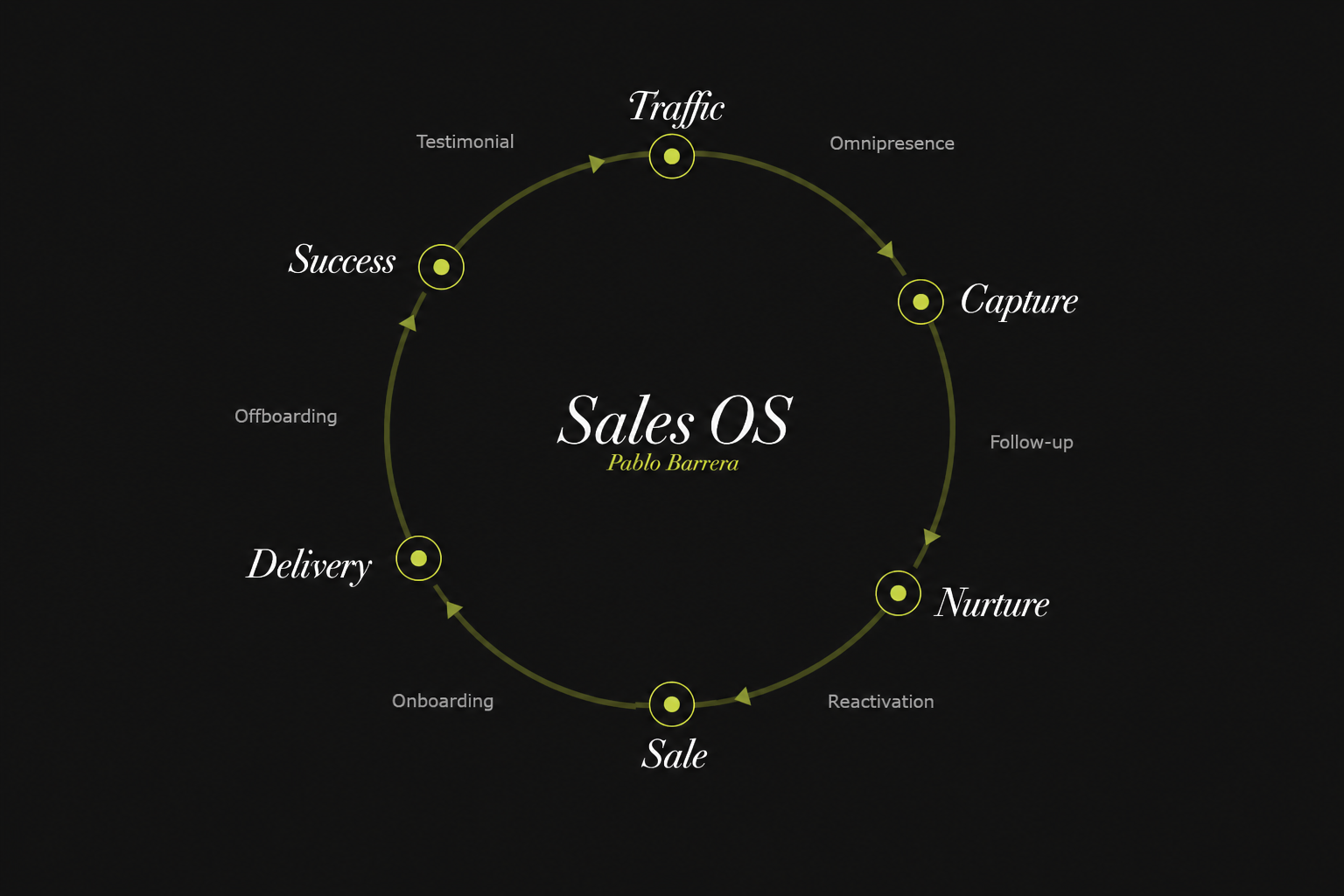
The Sales OS is built around three levels that work together: the Funnel System, the Flywheel System, and the Client Journey System. Each one solves a different part of the problem.
Level 1: The Funnel System
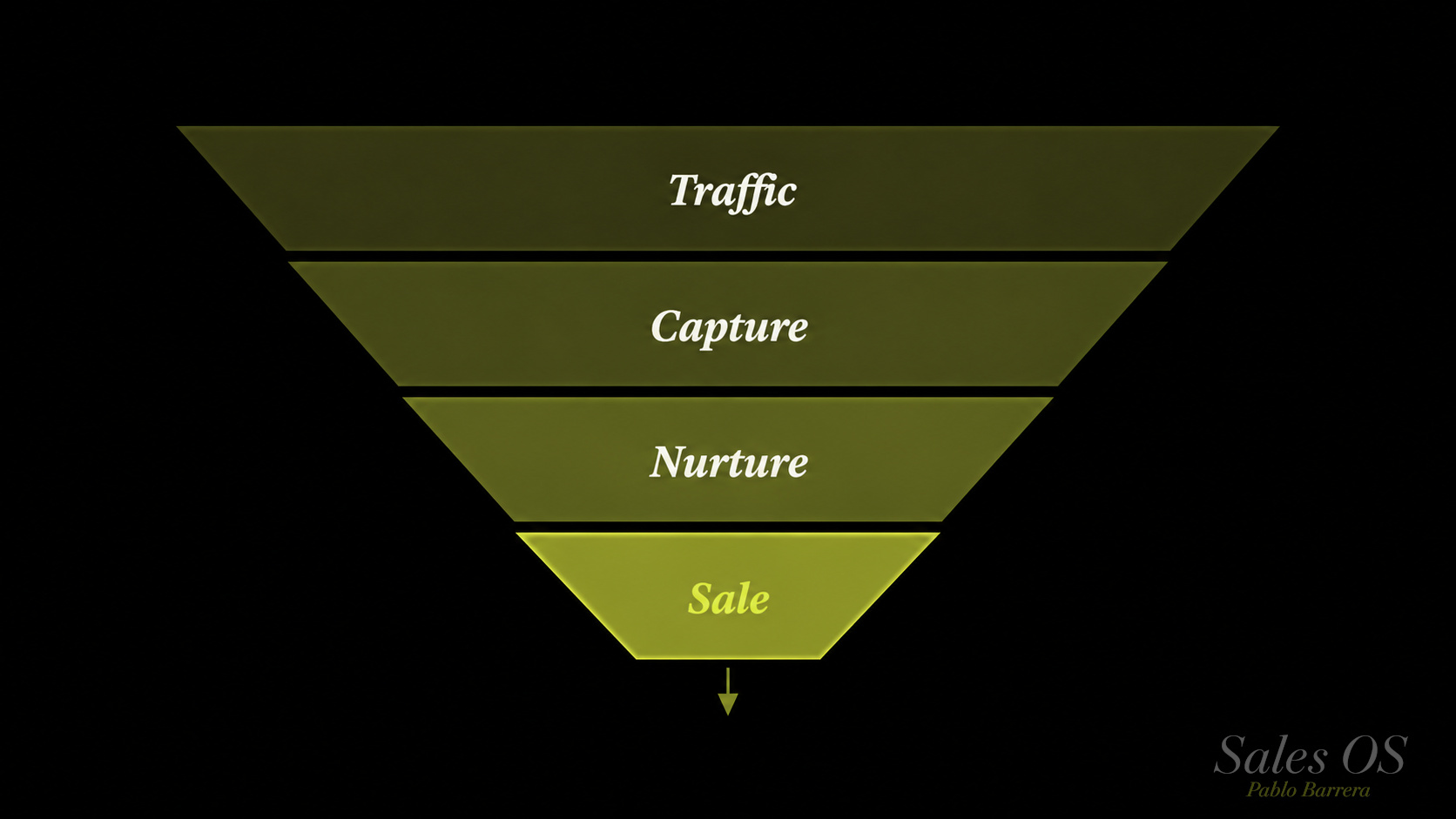
The Funnel System is the foundation. It's a linear path that takes someone who has never heard of you and moves them toward a sale. It has four stages:
1) Traffic
Getting in front of the right people. Traffic can come from three types of sources: traffic you control (Meta Ads — you decide who sees it, when, and how much you spend), traffic you don't control (organic content, referrals, outreach), and traffic you own (your email list). Most service businesses rely almost entirely on traffic they don't control. The Sales OS changes that by combining at least two of the three types.
2) Capture
Once someone finds you, the next step is capturing their interest before they leave and forget about you. This usually means getting their email address or starting a conversation — a landing page with a lead magnet, a form, a DM automation. The goal is to convert traffic into something you own: a contact you can reach again without depending on any platform.
3) Nurture
Having someone's email or starting a conversation is a beginning. Turning that into a sale usually takes more than one touchpoint. This is where trust gets built: a webinar, a newsletter, long-form content, a follow-up sequence. The goal is to build enough trust that the sale feels like a natural next step.
4) Sale
The final step: the conversion. Depending on the offer and price point, this might be a sales call booked through a calendar, a direct chat conversation, a checkout page, or a combination. The system should make this step as frictionless as possible.
Level 2: The Flywheel System
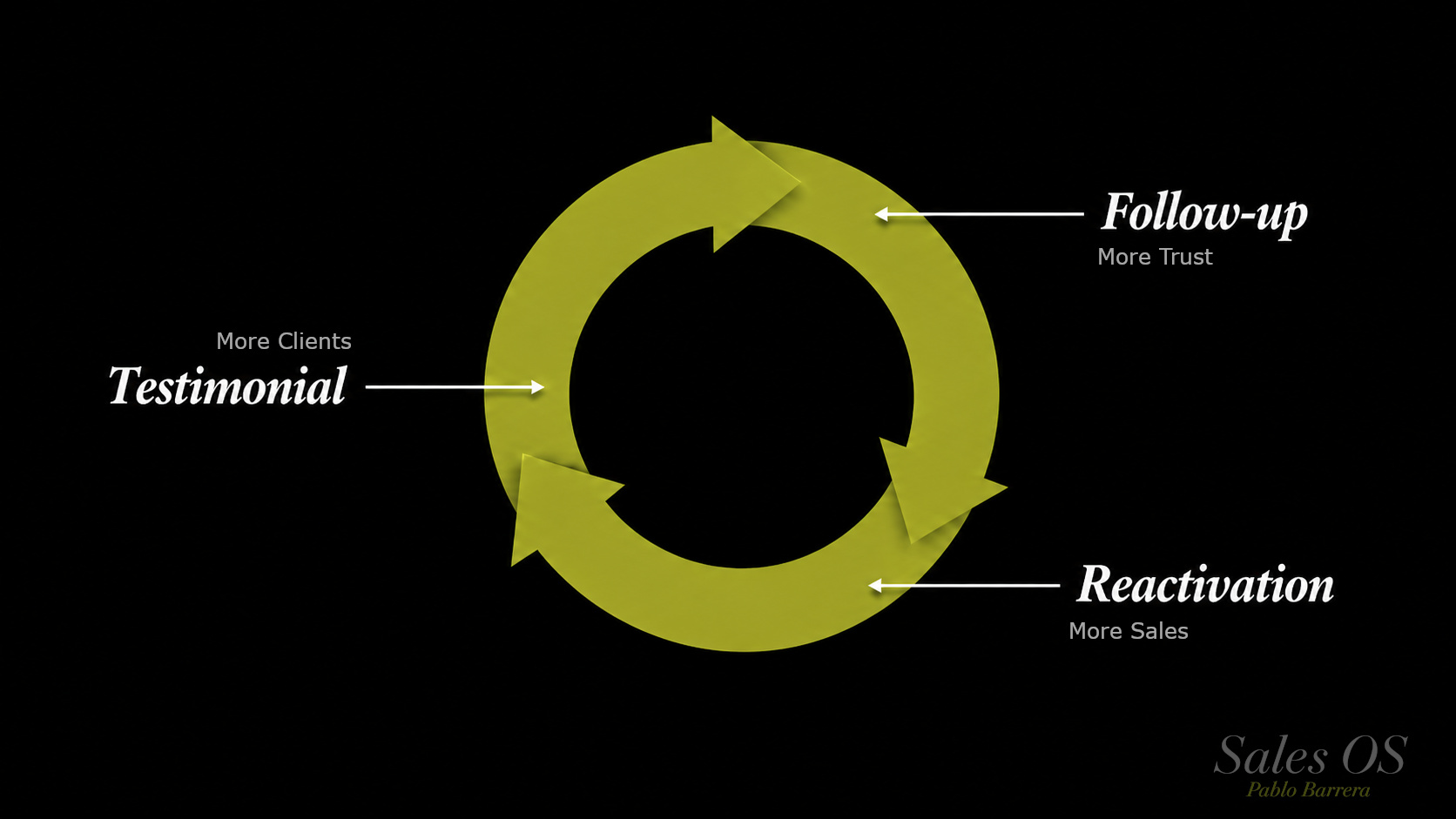
The Funnel System gets people in. The Flywheel System makes the funnel better over time. The core idea is turning the funnel from a straight line into a loop. Every cycle produces data, and that data feeds back into the beginning to improve results.
1) Follow-up
People don't always buy on the first contact. A follow-up sequence keeps interested people moving toward the next step without you having to track each one manually — through email sequences, reminders, and rebook links.
2) Reactivation
Some people show interest and then go silent. A reactivation sequence reaches back out to people who haven't taken the next step yet, at the right moment and without friction. This recovered a good portion of conversations before the deadline in the bakery project we worked on.
3) Testimonial
Every client who gets a result is an opportunity to strengthen the top of the funnel. A testimonial sequence, sent at the right moment after the engagement ends, collects that feedback and puts it to work in ads, landing pages, and follow-up emails. The flywheel gets stronger with each cycle. More testimonials mean better conversion. Better conversion means more clients.
Level 3: The Client Journey System
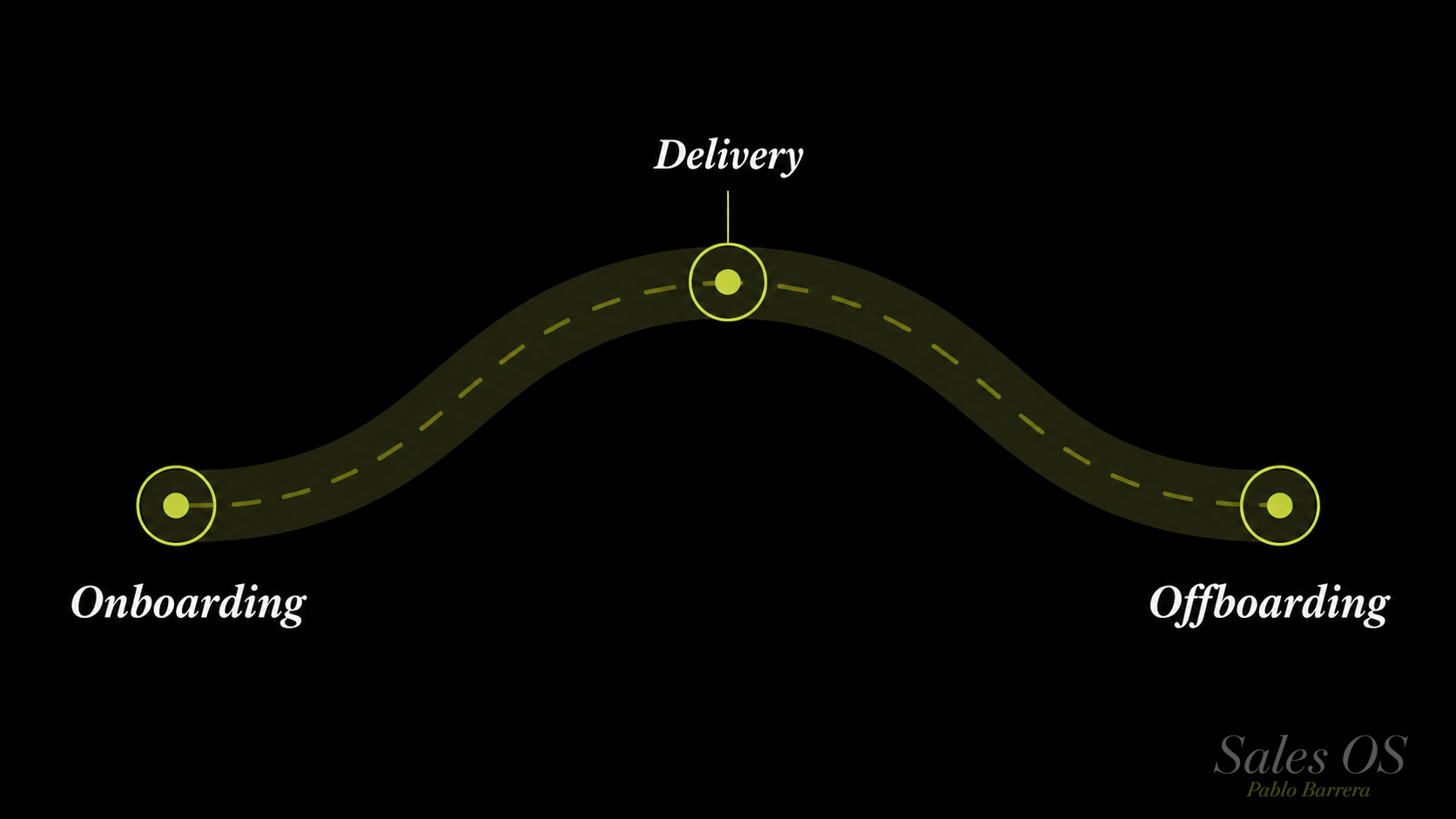
The first two levels focus on acquiring clients. This one focuses on what happens after someone says yes. A lot of service businesses put enormous energy into getting clients and almost none into what the experience looks like once they're in the door.
1) Onboarding
A structured onboarding process sets expectations, reduces confusion, and starts the relationship on solid ground. When onboarding is handled through automated sequences and templates, the owner doesn't have to do it from scratch with every new client.
2) Delivery
How the work is delivered, tracked, and wrapped up is more important than most people expect. A well-structured delivery process closes the loop professionally and creates the conditions for loyal clients to refer you or continue working with you.
3) Offboarding
Past clients are often the warmest audience for future offers. A post-engagement email sequence can introduce a new program, ask for a referral, or offer an affiliate arrangement — all without requiring you to manually reach out each time.
How this comes together in practice
With a specialist dog trainer selling an online program, we started with the Funnel System only. The first campaigns attracted two different audiences — one could buy, the other couldn't afford it. Because the system was measurable, we could see the problem quickly and fix it. We narrowed the targeting, added a qualification step, and adjusted the follow-up emails.
With half the original ad spend, results improved significantly. The final result: more than 10 sales calls, 2 program sales at $2,997 each, and 3 coaching sessions — a total of $6,294.
Starting small and iterating
One of the most common mistakes is wanting to build everything at once. A reasonable starting point for most coaches and consultants:
- At least one source of traffic you control or own
- A landing page or simple capture mechanism
- A basic follow-up sequence
- A booking flow for discovery calls
That's enough to start generating data. From there, you add and refine based on what's working. If you can measure it, you can improve it.
The final layer of the Sales OS
Once the Sales OS is running, organic content becomes more powerful. The focus of this final layer is usually long-form content and repurposing systems. You create fewer but bigger pieces of content and then have systems to turn that into smaller pieces to distribute across different platforms.
This is what makes the owner omnipresent. Someone who sees an ad and enters the funnel will also encounter your social media posts, your articles, your newsletter. Each touchpoint reinforces the others. The more places someone sees your name and your message, the more trust builds over time.
That combination — a system generating demand in the background and content building authority in parallel — is what makes client acquisition feel less like a constant sprint and more like something that runs on its own. At a certain point, the system can reach a level where sales calls become optional. The funnel, the follow-up, and the content are doing enough of the work that some clients arrive ready to buy without needing a conversation first.
What to do next
- Are people finding you?
- Are they showing interest?
- Is there any follow-up?
- Are those conversations converting?
Si tenés un negocio de coaching o consultoría, probablemente hayas tenido meses que se sintieron impredecibles de una forma que no podías explicar del todo. Estás haciendo el trabajo, apareciendo, entregando resultados para tus clientes, y aun así no sabés de dónde va a venir el próximo.
Después de hablar con coaches y consultores de diferentes nichos, el patrón era casi siempre el mismo. Expertise sólido, buenos resultados para los clientes actuales, y aun así ninguna forma confiable de conseguir el próximo de forma más predecible.
Ese es el problema que el Sales OS está diseñado para resolver.
Por qué las referencias, el outreach y el contenido tienen límites
La mayoría de los coaches y consultores dependen de una de tres cosas para conseguir clientes: referencias, contenido o outreach.
Las referencias llegan en el momento que alguien más decide. No podés activarlas cuando las cosas se ponen lentas. El contenido funciona, pero lento e impredeciblemente. No podés decidir que necesitás tres clientes este mes y lograrlo publicando más. El outreach manual requiere tiempo y energía todos los días para mantener el pipeline activo.
Ninguno de estos te da una forma consistente y controlable de llegar a las personas correctas en tu propio calendario. Y eso se convierte en un problema mayor cuanto más alto es tu precio.
"Expertise sólido, un nicho con demanda, y una oferta que llevaba meses disponible sin ganar tracción: 10 visitas al sitio en total. Sin lista de email. Sin seguimiento. Sin ventas."
El expertise y la oferta eran sólidos. Lo que faltaba era la infraestructura alrededor de ellos. Sin un sistema que conecte la atención con la compra, incluso una oferta sólida permanece invisible.
Qué hace realmente un sistema de ventas
Un sistema de ventas es un conjunto de procesos conectados que llevan a alguien desde no saber que existís hasta convertirse en cliente, sin requerir que estés involucrado manualmente en cada paso. Cuando funciona bien, hace varias cosas a la vez:
- Llega a las personas correctas de forma consistente, no solo cuando el algoritmo coopera
- Captura su interés antes de que se enfríe, para que seas dueño de esa audiencia
- Hace el seguimiento automáticamente para que nadie se pierda
- Mueve a las personas hacia una conversación o compra en el momento correcto
El Sales OS está construido alrededor de tres niveles que trabajan juntos: el Funnel System, el Flywheel System y el Client Journey System. Cada uno resuelve una parte diferente del problema.
Nivel 1: El Funnel System
El Funnel System es la base. Es un camino lineal que lleva a alguien que nunca escuchó de vos hasta una venta. Tiene cuatro etapas:
1) Tráfico
Ponerse frente a las personas correctas. El tráfico puede venir de tres tipos de fuentes: tráfico que controlás (Meta Ads), tráfico que no controlás (contenido orgánico, referencias, outreach) y tráfico que poseés (tu lista de email). La mayoría de los negocios de servicios dependen casi exclusivamente del tráfico que no controlan. El Sales OS cambia eso combinando al menos dos de los tres tipos.
2) Captura
Una vez que alguien te encuentra, el siguiente paso es capturar su interés antes de que se vaya y te olvide. Esto generalmente significa obtener su email o iniciar una conversación. El objetivo es convertir el tráfico en algo que poseás: un contacto al que podés llegar nuevamente sin depender de ninguna plataforma.
3) Nurture
Tener el email de alguien o iniciar una conversación es un comienzo. Convertir eso en una venta generalmente requiere más de un punto de contacto. Aquí es donde se construye la confianza: un webinar, una newsletter, contenido de largo aliento, una secuencia de seguimiento.
4) Venta
El paso final: la conversión. Dependiendo de la oferta y el precio, esto puede ser una llamada de ventas agendada, una conversación de chat directa, una página de checkout, o una combinación. El sistema debería hacer este paso lo más fluido posible.
Nivel 2: El Flywheel System
El Funnel System trae personas. El Flywheel System mejora el embudo con el tiempo. La idea central es convertir el embudo de una línea recta en un ciclo. Cada vuelta produce datos, y esos datos retroalimentan el comienzo para mejorar los resultados.
1) Seguimiento
Las personas no siempre compran en el primer contacto. Una secuencia de seguimiento mantiene a los interesados avanzando hacia el próximo paso sin que tengas que rastrear cada uno manualmente.
2) Reactivación
Algunas personas muestran interés y luego se silencian. Una secuencia de reactivación vuelve a contactar a las personas que no dieron el próximo paso todavía, en el momento correcto y sin fricción.
3) Testimonios
Cada cliente que obtiene un resultado es una oportunidad para fortalecer la parte superior del embudo. Una secuencia de testimonios, enviada en el momento correcto después de que termina el trabajo, recopila ese feedback y lo pone a trabajar en anuncios, landing pages y emails. El flywheel se fortalece con cada ciclo.
Nivel 3: El Client Journey System
Los primeros dos niveles se enfocan en adquirir clientes. Este se enfoca en lo que sucede después de que alguien dice que sí. Muchos negocios de servicios ponen una energía enorme en conseguir clientes y casi ninguna en cómo es la experiencia una vez que están adentro.
1) Onboarding
Un proceso de onboarding estructurado establece expectativas, reduce la confusión y comienza la relación sobre terreno sólido. Cuando el onboarding se maneja a través de secuencias automatizadas y plantillas, el dueño no tiene que hacerlo desde cero con cada nuevo cliente.
2) Entrega
Cómo se entrega, rastrea y cierra el trabajo es más importante de lo que la mayoría espera. Un proceso de entrega bien estructurado cierra el ciclo profesionalmente y crea las condiciones para que los clientes leales te refieran o continúen trabajando con vos.
3) Offboarding
Los clientes anteriores suelen ser la audiencia más receptiva para futuras ofertas. Una secuencia de email post-trabajo puede presentar un nuevo programa, pedir una referencia u ofrecer un acuerdo de afiliado, todo sin requerir que contactes a cada uno manualmente.
Cómo esto funciona en la práctica
Con un entrenador especializado que vendía un programa online, empezamos solo con el Funnel System. Las primeras campañas atrajeron dos audiencias diferentes — una podía comprar, la otra no tenía el presupuesto. Como el sistema era medible, pudimos ver el problema rápidamente y corregirlo. Ajustamos el targeting, agregamos un paso de calificación y modificamos los emails de seguimiento.
Con la mitad del gasto en anuncios original, los resultados mejoraron significativamente. El resultado final: más de 10 llamadas de ventas, 2 ventas del programa a $2,997 cada una y 3 sesiones de coaching — un total de $6,294.
Empezar pequeño e iterar
Uno de los errores más comunes es querer construir todo de una vez. Un punto de partida razonable para la mayoría de los coaches y consultores:
- Al menos una fuente de tráfico que controlás o poseés
- Una landing page o mecanismo simple de captura
- Una secuencia básica de seguimiento
- Un flujo de agenda para llamadas de descubrimiento
Eso es suficiente para empezar a generar datos. A partir de ahí, agregás y refinás según lo que funciona. Si podés medirlo, podés mejorarlo.
La capa final del Sales OS
Una vez que el Sales OS está funcionando, el contenido orgánico se vuelve más poderoso. El foco de esta capa final generalmente son el contenido de largo aliento y los sistemas de repurposing. Creás menos piezas pero más grandes, y luego tenés sistemas para convertirlas en piezas más pequeñas y distribuirlas en diferentes plataformas.
Esto es lo que hace que el dueño sea omnipresente. Alguien que ve un anuncio y entra al embudo también va a encontrar tus publicaciones en redes, tus artículos, tu newsletter. Cada punto de contacto refuerza a los otros. Cuantos más lugares vea alguien tu nombre y tu mensaje, más confianza se construye con el tiempo.
Esa combinación — un sistema generando demanda en el fondo y contenido construyendo autoridad en paralelo — es lo que hace que la adquisición de clientes se sienta menos como un sprint constante y más como algo que funciona solo. En algún punto, el sistema puede llegar a un nivel donde las llamadas de ventas se vuelven opcionales. El embudo, el seguimiento y el contenido están haciendo suficiente del trabajo para que algunos clientes lleguen listos para comprar sin necesitar una conversación primero.
Qué hacer ahora
- ¿Las personas te están encontrando?
- ¿Están mostrando interés?
- ¿Hay algún seguimiento?
- ¿Esas conversaciones están convirtiendo?
If you want to build something like this for your business, book a free strategy call.
Get a Free Strategy Review